Downloads
| Brochure | Braincubator presentation |
| Manual | BRAINCUBATOR-manual |
| Application notes | Braincubator Application note – acute brain slices |



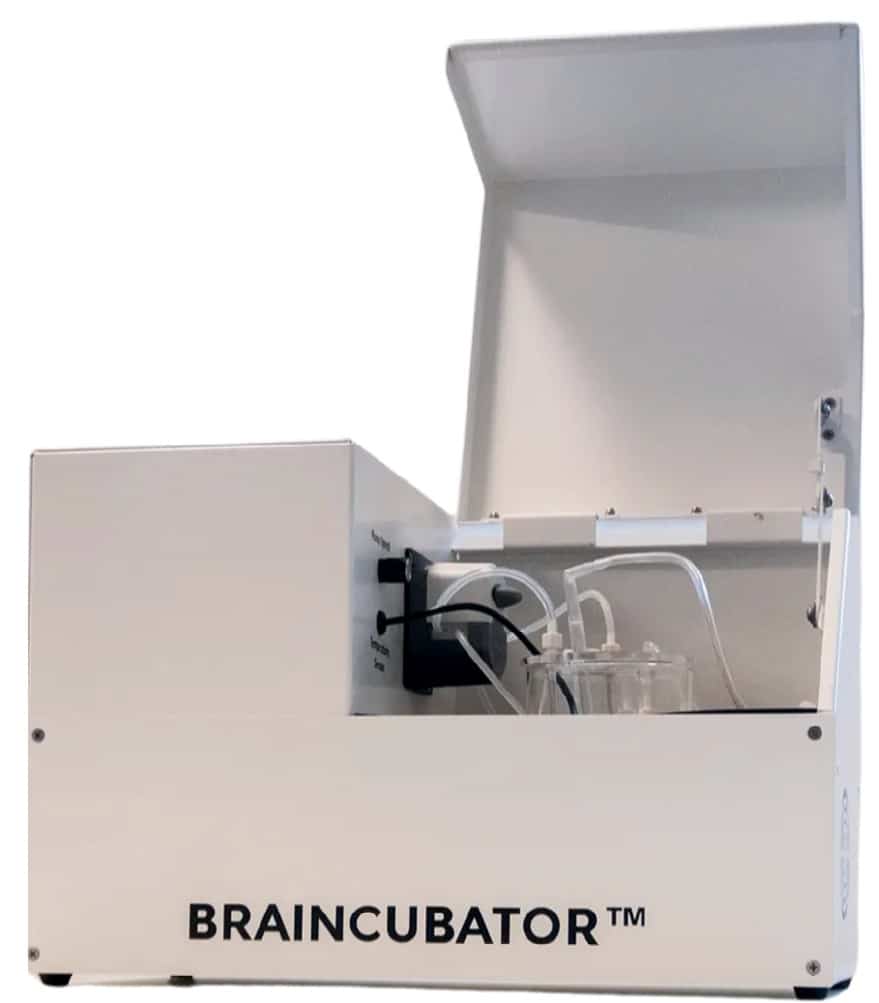
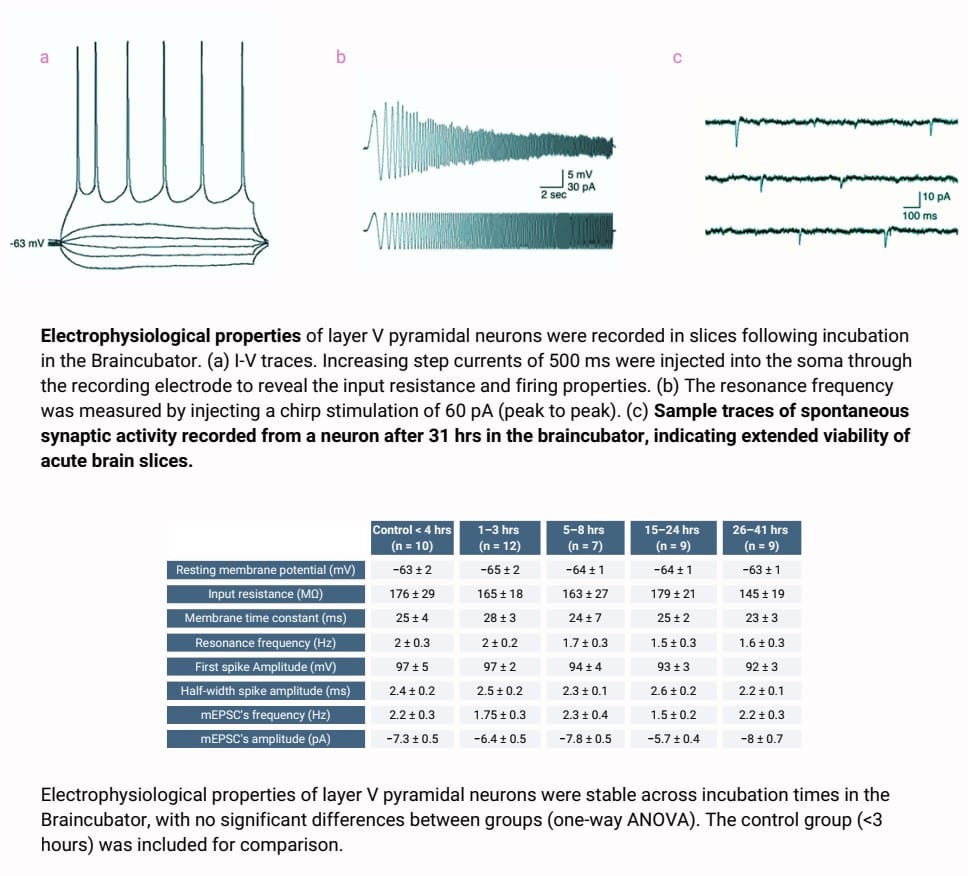
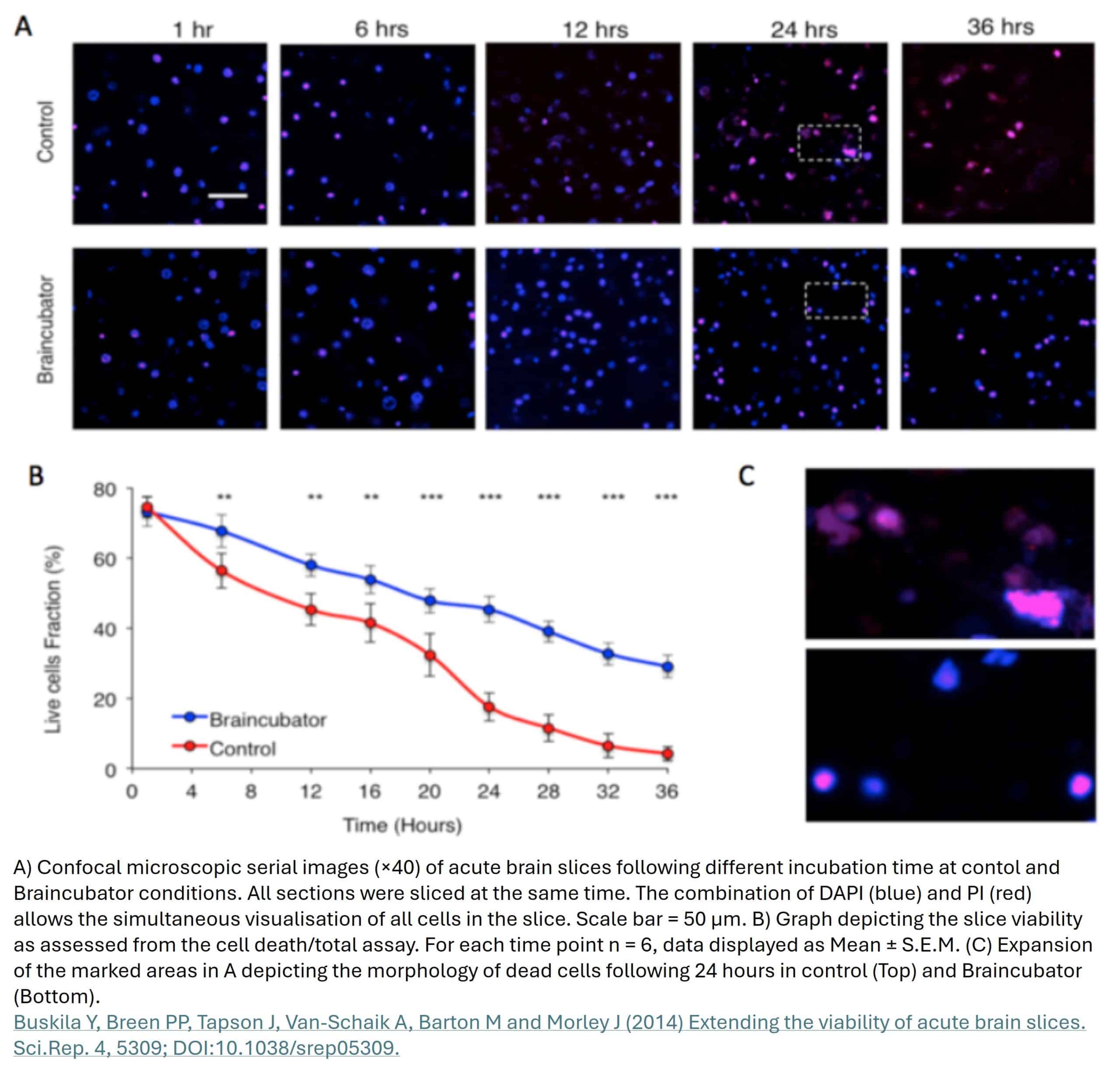
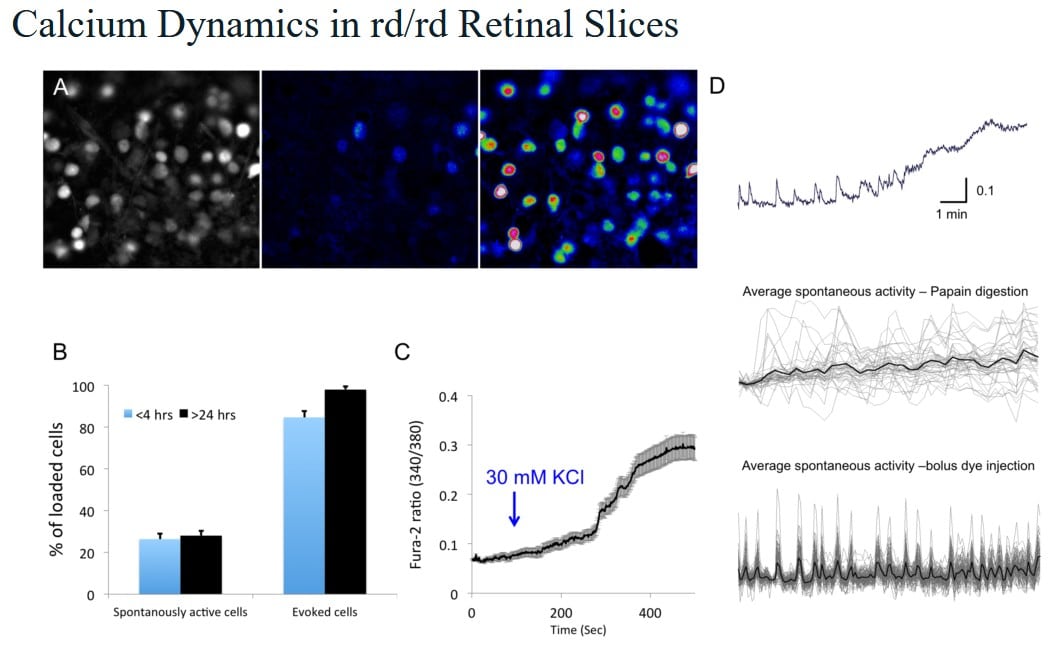
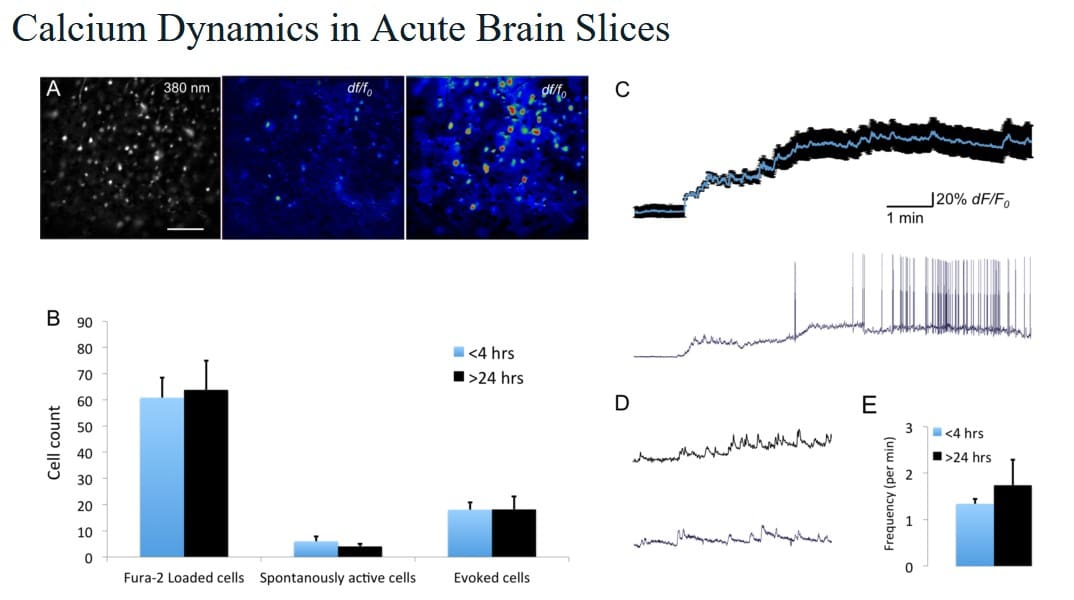
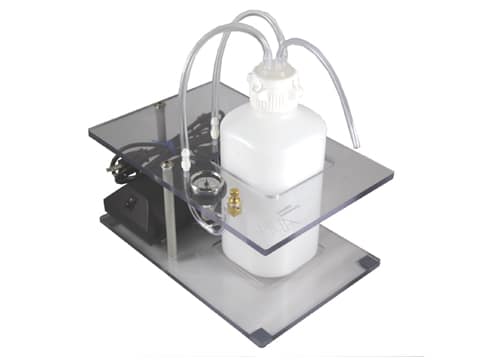
The Braincubator is a premium acute brain slice incubator designed to significantly extend the lifespan of tissue slices beyond 30 hours.
For more information or pricing, please contact us.
| Brochure | Braincubator presentation |
| Manual | BRAINCUBATOR-manual |
| Application notes | Braincubator Application note – acute brain slices |
Stable incubation conditions, improves data consistency & reduces variability across experiments.
Maintains slice integrity & functionality for extended periods, enabling longer & more complex studies.
Provides viable tissue for two days, reduces brain slice prep time & the number of animals required for research.
Parameter |
Premium Incubator (Braincubator) |
Standard slice incubation |
| Tissue Viability | >36 h | 6-8 h |
| Bacterial growth control | permanent UVC filtration | none |
| Solution control | permanent regulation of temperature and pH, incl. Monitoring |
only temperature control |
| Animal use | down to half or less | high |
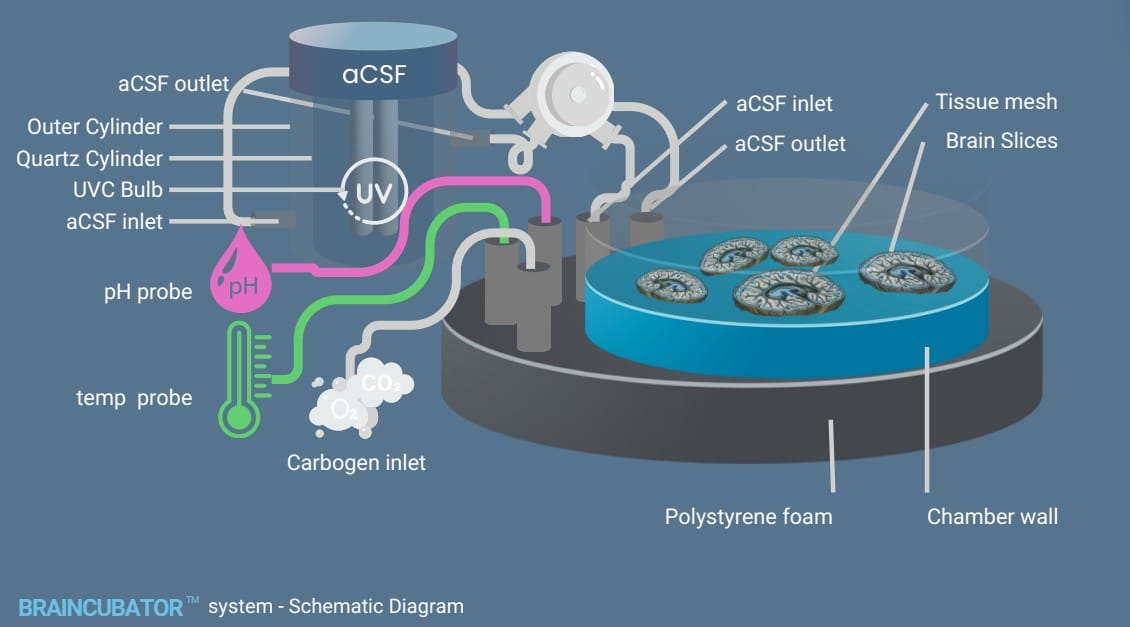
The Braincubator™ is an advanced incubation system designed to prolong the viability of thin tissue samples, including acute brain slices and wholemount retina. It achieves this by precisely regulating the temperature and pH of artificial cerebrospinal fluid (aCSF) while continuously circulating the fluid through a UVC filtration system to minimize bacterial growth.
By maintaining exceptionally low bacterial levels, the Braincubator™ significantly extends tissue lifespan, enabling researchers to perform long-duration intracellular and extracellular recordings as well as imaging experiments. The system also records and stores solution conditions, allowing for later review and verification of tissue health.
Overall, the Braincubator™ establishes a gold standard for acute slice incubation, increasing experimental time, improving reliability, and reducing the number of animals required to meet research objectives.
For further information see Braincubator.com.
Standard incubation chambers may appear cheaper, but tissue quality often deteriorates within hours. By maintaining slice viability for over 36 hours, this system enables longer recordings, improves data quality, and reduces failed experiments. The increased experimental yield can cut animal use by up to 50%, allowing laboratories to generate more data from fewer animals while quickly recovering the initial investment.
The Braincubator™ is an advanced incubation system designed to extend the lifespan and viability of thin tissue samples such as acute brain slices and wholemount retina.
It precisely controls the temperature and pH of artificial cerebrospinal fluid (aCSF) while continuously circulating the solution through a UVC filtration system to minimize bacterial growth.
The system is optimized for thin slice tissue, including acute brain slices and wholemount retina preparations.
By precisely regulating pH and temperature while using UVC filtration to stop bacterial growth, the Braincubator™ significantly prolongs tissue viability compared to traditional incubation methods.
The extended tissue lifespan allows for long-duration intracellular and extracellular recordings, as well as imaging experiments requiring stable conditions over many hours.
Continuous UVC filtration keeps bacterial levels extremely low, reducing contamination risk and helping maintain consistent experimental conditions.
Yes. Temperature, pH, and other solution conditions are continuously recorded and saved, allowing researchers to review data for validation and analysis of tissue health.
By extending experimental time from a single tissue sample, researchers can complete more experiments per preparation, reducing the total number of animals required.
The Braincubator™ combines precise environmental control, continuous UVC filtration, and condition logging, establishing a gold-standard approach to acute slice tissue incubation.
It is ideal for neuroscience researchers and laboratories conducting electrophysiology or imaging experiments that require stable, long-term tissue viability.
Yes. Standard and cheaper incubation chambers often suffer from bacterial growth and fluctuating pH levels, leading to rapid cell death. A premium acute brain slice incubator prevents this, saving money in the long run through fewer failed experiments and reduced animal usage.
| Brochure | Braincubator presentation |
| Manual | BRAINCUBATOR-manual |
| Application notes | Braincubator Application note – acute brain slices |