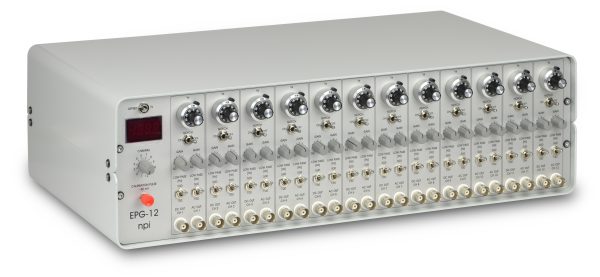

The EPG – Electrical Penetration Graph Amplifier (e.g., EPG-12) is a specialized electrophysiology amplifier designed to support Electrical Penetration Graph (EPG) recordings, a technique used to study the feeding behavior of insects with penetrating mouthparts (such as aphids, whiteflies, leafhoppers and similar species) on plant hosts. By converting subtle electrical changes that occur when an insect’s stylet probes plant tissues into measurable signals, the EPG amplifier enables detailed analysis of feeding events, waveform patterns and biological interactions. Read more…
EPG is an electrophysiological technique used primarily to study how insects with piercing-sucking mouthparts (e.g., aphids) feed on plants. It works by completing an electrical circuit between insect and plant electrodes, with feeding events causing measurable voltage/resistance fluctuations that are recorded as waveform graphs.
Different EPG waveform patterns correlate with specific insect activities — including pathway penetration, salivation, ingestion and changes in feeding status — which are useful for behavioral characterization and plant resistance studies.
Yes. Typical EPG setups use a fine gold or platinum wire electrode attached to the insect and a plant reference electrode (often in the soil or plant medium). These are connected through the amplifier’s headstage and recording inputs.
Some models such as the EPG-12 support multiple independent recording channels (e.g., 12), enabling parallel recordings from multiple insects or circuits.
DC mode captures both electromotive force (EMF) and resistance components and is often used for detailed waveform analysis of biological events; AC mode focuses primarily on resistance changes, highlighting mechanical aspects of feeding.

Our dedicated team has years of industry and laboratory experience.
From complex technical challenges to tailored product recommendations,
our application scientists are ready to support your needs with hands-on expertise.